




Ending Nigeria’s Almajiri tragedy: Reform, not rejection
By Blessing Omolola
I read with great interest an article published in Daily Trust on June 9, 2026, titled “Ending Nigeria’s Almajiri Tragedy.” The essay analysed one of the most enduring social challenges in Northern Nigeria. It traces the foundations of the Almajiri system, highlights its original educational purpose, and examines the circumstances that have made it a source of concern for parents, policymakers, religious leaders, and society at large.
The author is right to argue that the current reality of the Almajiri system bears little resemblance to its noble origins. However, while the diagnosis of the problem is accurate, the conversation must now move beyond lamentation toward practical and sustainable solutions. Historically, the Almajiri system was a respected institution of Islamic learning.
Children were sent to study the Qur’an, Islamic jurisprudence, moral values, discipline, and character under the guidance of learned scholars. Communities, traditional institutions, parents, and local authorities collectively supported the system. Students were not abandoned to fend for themselves; rather, they were nurtured within a structured environment that combined education with moral development.
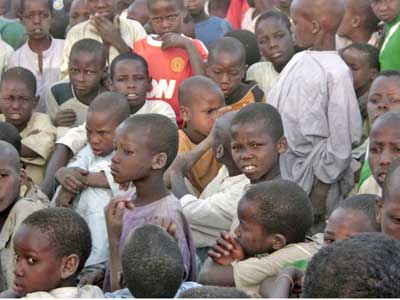
Over time, however, economic hardship, rapid population growth, weakening social support systems, poor governance, and inadequate regulation contributed to the gradual erosion of the system’s original ideals. Today, many Almajiri children roam the streets in search of food and money, often exposed to exploitation, neglect, and abuse, contradicting the vision that inspired the system centuries ago.
The necessary reform must focus on rebuilding rather than abolishing the institution. A crucial factor is the enrolment age. Young children are particularly vulnerable and often lack the maturity and resilience needed to live away from their families. Establishing a regulated minimum enrolment age would help protect children from unnecessary hardship while ensuring they are developmentally prepared for independent learning.
Equally important is the issue of parental responsibility. One of the factors driving the current crisis is the tendency of some parents to transfer the entire responsibility for their children’s upbringing and welfare to Islamic teachers. Education should be a shared responsibility involving parents, teachers, communities, and government institutions.
Parents must remain actively involved in their children’s lives by maintaining regular contact, monitoring their welfare, contributing to their upkeep, and tracking their educational progress. A system that completely disconnects parents from their children’s daily lives weakens accountability and creates opportunities for neglect. Any reform agenda must therefore reinforce parental obligations rather than diminish them.
The Government also has a central role to play. There is an urgent need for a comprehensive regulatory framework governing the establishment and operation of Almajiri schools. Registration should be mandatory, and institutions should be required to meet minimum standards relating to accommodation, sanitation, healthcare, feeding, and educational delivery.
Regular checks by relevant authorities would ensure compliance and distinguish legitimate educational institutions from those operating without regard for children’s welfare. Another key reform is the integration of Islamic and formal education; religious preservation should not isolate children from modern knowledge and skills. Literacy, numeracy, vocational education, digital skills, entrepreneurship, and civic education can coexist with Islamic studies.
Such integration would equip students with the tools necessary to thrive in contemporary society while preserving their religious and cultural identity. Indeed, education should expand opportunities, not restrict them. The reform process must also involve religious leaders, traditional rulers, community associations, and civil society groups.
The Almajiri challenge cannot be solved by the government alone. Religious leaders, in particular, possess the moral authority needed to champion reforms that align with Islamic teachings on compassion, dignity, justice, and child welfare. Their involvement can help overcome resistance and build community ownership of the reform process.
Above all, the welfare of the child must be the core of every intervention. Every child deserves access to quality education, adequate nutrition, healthcare, shelter, and protection from abuse. Any educational arrangement that leaves children vulnerable to hunger, homelessness, exploitation, or street begging opposes the spirit of Islam and the principles of child rights.
The objective should not be to dismantle the Almajiri system but to restore its original purpose as a respected institution of learning and character formation. Through responsible parenting, effective regulation, educational integration, community participation, and strong child protection mechanisms, Nigeria can transform the Almajiri system into a model that combines religious values with modern opportunities.
Finally, reform without enforcement will achieve little. Individuals or institutions that exploit children under the guise of religious education must be held accountable. Child protection laws and sanctions must be enforced to safeguard the rights and dignity of children. The tragedy of the Almajiri child is not inevitable. It can be overcome through thoughtful reforms, collective responsibility, and sustained commitment.
Blessing Omolola is a student in the Department of Strategic Communication, Yakubu Gowon University, Abuja.
