




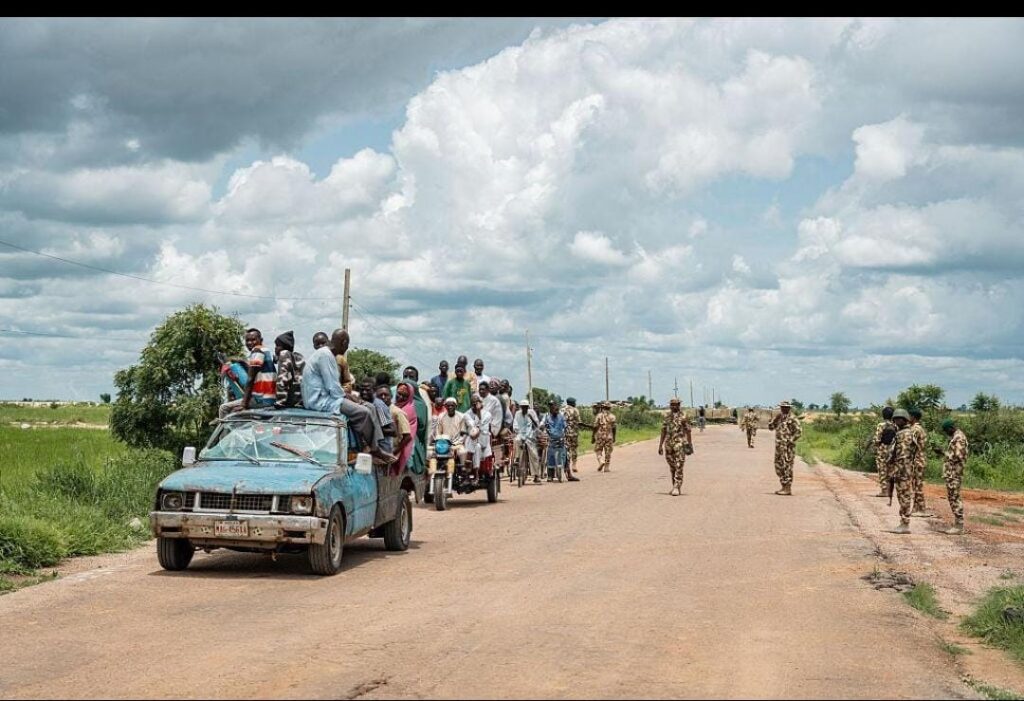
Insecurity: How Fear Is Reshaping Nigeria
By John Peace Ginikachukwu
The fear begins before dawn. It begins when a mother wakes up and quietly says a prayer before her child leaves for school. It begins when a traveler sends a message to loved ones saying, “I’ve boarded the bus,” hoping to arrive safely at the destination. It begins when a farmer looks at his farm land from a distance, uncertain whether it is safe enough to return to work.
Across Nigeria, fear has become an unwelcome companion in the daily lives of millions of people, making them lose faith in a system they once believed would protect them but now leaves many feeling vulnerable and unprotected.
For many Nigerians, insecurity is no longer just a topic discussed on television or read about in newspapers. It has become a reality that shapes everyday decisions. From kidnapping and banditry to armed robbery, terrorism, and communal clashes, the growing security challenges in the country have changed how people live, work, travel, and interact with one another.
Today, many citizens live with a constant sense of uncertainty. A simple journey that should take a few hours now comes with anxiety. Parents worry when their children leave home. Business owners close their shops earlier than they used to. Farmers refuse to go to their farm lands because they fear they may not return to their families. Students travel with caution. Communities sleep with one eye open.
Insecurity has quietly altered the rhythm of life in Nigeria.
One of the most painful consequences of insecurity is the loss of peace of mind. Nigerians are becoming increasingly accustomed to hearing stories of abductions, attacks, and violent crimes. What was once shocking has gradually become common. Every breaking news report about another kidnapping or attack leaves families wondering if they could be next.
This atmosphere of fear affects people emotionally and psychologically. Many individuals now live in a state of heightened alertness. They are careful about where they go, whom they trust, and what time they leave their homes. The freedom to move about without fear, a basic aspect of everyday life, has become a luxury in some parts of the country that many people can no longer afford. People live with the fear of death, while constant reports of bad news deepen their anxiety.
The economic impact is equally devastating.
For traders, insecurity often means fewer customers and reduced income. For farmers, it can mean abandoning farm lands that have sustained their families for generations. In several communities, agricultural activities have been disrupted because people fear attacks while working in remote areas. The result is reduced food production, rising food prices, and increasing hardship for ordinary Nigerians.
In desperation, some people may even resort to kidnapping their loved ones or serving as informants to kidnappers in exchange for stipends simply to survive and feed their families.
Small businesses also suffer. Many entrepreneurs spend additional money on security measures, while others relocate entirely or shut down their operations. Investors who might have contributed to economic growth often hesitate because of concerns about safety and stability.
The consequences extend far beyond finances.
Insecurity is gradually weakening the social fabric that binds communities together. People are becoming more suspicious of strangers. Neighbours who once left their doors open now lock them tightly. Social gatherings are approached with caution. Trust, which is essential for healthy communities, is slowly being replaced by fear and uncertainty.
Education has also been affected. In some areas, such as Oriire Local Government Area of Oyo State, concerns about safety have disrupted learning and created fear among students, parents, and teachers. The thought that a place of learning could become a place of danger is heartbreaking. For young people whose dreams depend on education, such disruptions can have lasting effects on their future.
A painful example of this reality is the abduction of the Chibok schoolgirls. On 14 April 2014, Boko Haram fighters abducted 276 girls from the Government Girls Secondary School in Chibok, Borno State. The girls had been at school when they were taken, turning a place meant for learning and preparation for the future into a scene of fear and uncertainty. Some of the girls later escaped, while others were released over the years. However, Amnesty International reported in 2024 that 82 of the girls were still believed to be in captivity, a decade after the abduction.
The tragedy did not affect only the girls who were taken. Their families were left with years of uncertainty, waiting for news about their daughters and hoping for their safe return. The incident also had a wider effect on education in the region. Amnesty International reported that academic activities in schools in Chibok remained limited because some parents were still reluctant to send their children to school for fear of another abduction.
The Chibok incident is a painful reminder that insecurity can take away more than physical safety. It can disrupt education, separate families, destroy dreams, and leave lasting emotional scars. UNICEF has also reported that children in northeastern Nigeria have continued to face abductions, recruitment, killing, and injury as a result of the ongoing conflict.
Chibok therefore remains more than a painful memory. It represents what can happen when insecurity reaches places that should be safe. A school should be a place where young people prepare for their future, not a place where families fear they may lose them.
Yet, despite these challenges, Nigerians continue to display extraordinary resilience.
Every day, people wake up and continue with their lives. Farmers return to their fields. Traders reopen their shops. Students attend classes. Families continue to hope for better days. Communities support one another in times of crisis. This resilience reflects the strength and determination that have always characterized the Nigerian spirit.
However, resilience should not be mistaken for acceptance.
No society should become comfortable with fear. No parent should have to wonder whether their child will return home safely. No citizen should live in constant anxiety about traveling, working, or simply existing. Security is not a privilege; it is a fundamental right.
Addressing insecurity requires more than military operations and security checkpoints. It demands effective governance, quality education, job creation, youth empowerment, community engagement, and a justice system that ensures accountability. It requires leaders who understand that behind every statistic is a human life, a family, and a story.
The conversation about insecurity must move beyond numbers and headlines. It must focus on the people whose lives are being reshaped every day by fear.
As Nigeria continues to navigate these challenges, one truth remains clear: a nation cannot fully thrive when its people live in fear. Development, prosperity, and national unity flourish best in an atmosphere of peace and security. Until that peace is restored, millions of Nigerians will continue to carry an invisible burden, the burden of uncertainty.
Perhaps that is the greatest tragedy of all: not just the lives lost to insecurity, but the countless lives being lived under its dark shadows.
John Peace Ginikachukwu is a 200-Level student of Strategic Communication, at Department of Development and Strategic Communication Faculty of Communication and Media Studies, University of Abuja.
