


ONE REFINERY IS NOT A POLICY: NIGERIA’S UNFINISHED FIGHT FOR FUEL INDEPENDENCE.
By Medubi Grace Oluwayemisi.
During one of Nigeria’s recurring fuel shortages, the filling station became an unlikely meeting point for people from every walk of life. Workers arrived before dawn, hoping to buy enough petrol to get to work. Commercial drivers waited for hours, calculating how much the shortage would add to their daily expenses. Parents worried about rising transport costs, while businesses struggled with the growing cost of keeping generators running.
For many Nigerians, the scene is painfully familiar. What makes it more frustrating is what lies beneath it: Nigeria is not a country without oil. It is a country that has spent decades struggling to turn its crude oil into the fuel its own people need.
For more than four decades, that contradiction has been part of the Nigerian experience, an almost ritual humiliation for a country that produces crude oil yet has struggled to keep its own petrol pumps consistently supplied. It is a strange kind of poverty: not a shortage of resources, but a shortage of the capacity to refine what the earth has already given.
That contradiction is what makes the recent expansion of Nigeria’s refining sector worth examining closely and honestly.
Nigeria’s refining sector has crossed a genuine historical threshold. The commissioning and operation of the Dangote Petroleum Refinery, alongside the government’s efforts to bring private technical partners into the rehabilitation of its ageing state-owned refineries, mark a significant shift in the country’s downstream oil industry.
But a single refinery, however large, is not a policy.
Real fuel independence requires several things to work together: functioning refineries, reliable crude feedstock, secure pipelines and an efficient distribution system. Celebrating Dangote’s success while these wider problems remain unresolved would therefore be premature.
That raises three important questions. Can NNPC’s state-owned refinery complexes actually be restored, or will private technical partnerships become another initiative that stalls, as previous turnaround-maintenance efforts did? Can crude allocation become predictable enough for Dangote and other refiners to operate without persistent feedstock uncertainty? And can Niger Delta pipelines be protected well enough for Nigerian crude to reliably reach legitimate producers and refineries?
Nigeria’s fuel security will ultimately be decided by the answers to these questions, not simply by the size of any single refinery.
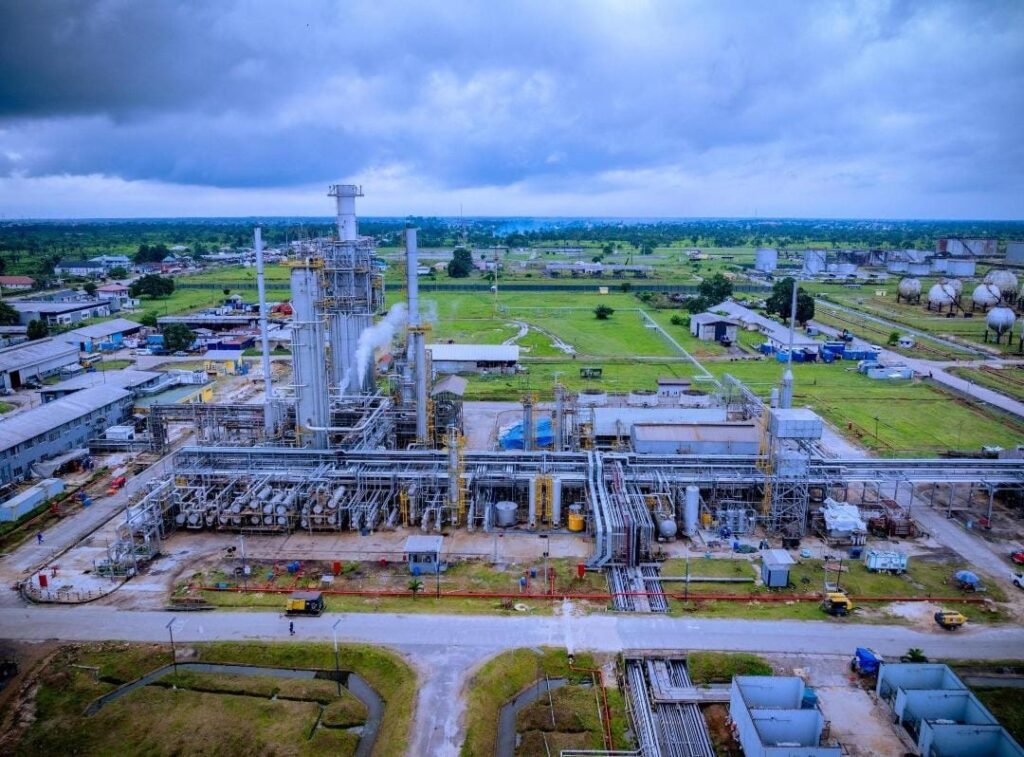
The Dangote Petroleum Refinery in Lagos was officially commissioned on May 22, 2023. Reuters reported that the commissioning marked a major development in Nigeria’s efforts to reduce its dependence on imported petroleum products.
According to Dangote Refinery’s official information, the facility has a nameplate capacity of 650,000 barrels per day. Reuters has also reported that the refinery was built at a cost of approximately $20 billion, making it one of the largest private investments in Nigeria’s energy sector.
The refinery began production in January 2024, according to Reuters. Its emergence has changed Nigeria’s refining landscape and created the potential to reduce reliance on imported petroleum products. More importantly, it demonstrates that large-scale refining operations can be established on Nigerian soil through significant private investment.
But its scale should not obscure the wider challenge. Nigeria still needs a refining system capable of maintaining supply when individual facilities experience technical problems, maintenance or other disruptions.
Nigeria’s state-owned refining system consists of the Port Harcourt, Warri and Kaduna refinery complexes. The Port Harcourt complex contains two refinery plants. These facilities were developed at different periods beginning in the 1960s and have struggled for years despite repeated rehabilitation efforts.
The problem, therefore, is not simply that Nigeria lacks refining capacity on paper. Much of that capacity has historically failed to translate into consistent commercial production.
In November 2025, NNPC Group Chief Executive Officer Bayo Ojulari acknowledged the poor performance of Nigeria’s state-owned refineries. The Punch reported on November 25, 2025, that Ojulari made the remarks during a question-and-answer session at a press briefing in Abuja. He said the Port Harcourt, Warri and Kaduna refineries, despite ongoing rehabilitation, remained “well below international standards,” making their products commercially uncompetitive compared with the privately owned Dangote Refinery. Ojulari also said NNPC was seeking competent private partners with proven refinery-management experience to support the revival of the state-owned refineries.
This admission matters because it highlights the gap between having refinery infrastructure and having refineries that operate efficiently and commercially.
These developments suggest that the government recognises the need for a different approach. But recognition is not the same as results. The real test is whether these partnerships produce sustained commercial operations rather than another cycle of rehabilitation promises.
Even Dangote has faced Nigeria’s wider oil-sector challenges. Securing sufficient crude feedstock for domestic refining has remained an important issue because significant volumes of Nigerian crude are tied to joint-venture arrangements and other contractual commitments. Reuters reported in August 2024 that Dangote had struggled to obtain sufficient Nigerian crude and had called for stronger enforcement of the Domestic Crude Supply Obligation. The report said the refinery had received only about half of the crude supply it required since beginning operations.
The Nigerian Upstream Petroleum Regulatory Commission (NUPRC), as the upstream regulator, therefore has an important role in this system because crude production, supply and upstream operations directly affect the amount of feedstock available to domestic refineries.
The lesson is straightforward: building a refinery does not automatically solve the feedstock problem. A refinery can only operate effectively when the crude required to keep it running is available, predictable and commercially viable.
Nigeria’s refining problem is therefore not simply a lack of crude or technical talent. It is the failure to consistently turn upstream resources and expertise into reliable downstream capacity.
For years, state refineries were repeatedly subjected to maintenance programmes that did not consistently restore sustained output. Imported petroleum products became the default response to domestic refining weaknesses because imports provided a short-term solution to a long-term structural problem. Meanwhile, crude theft and pipeline vandalism in the Niger Delta have repeatedly weakened the country’s oil production system and created additional challenges for legitimate operations.
Three deeper institutional problems stand out.
First, successive governments often treated refinery deterioration as tomorrow’s problem. Rehabilitation became cyclical: facilities deteriorated, government announced maintenance, money was committed, expectations rose, and sustainable production remained elusive.
Second, subsidy and petroleum-product pricing policies distorted incentives within the petroleum sector for years. Instead of creating a stable environment in which domestic refining could compete and expand, Nigeria frequently relied on imported petroleum products to meet domestic demand.
Third, pipeline security has remained a persistent challenge. Crude theft is not merely an economic crime; it damages the entire energy chain. When crude is stolen or pipelines are vandalised, production falls, legitimate refineries face feedstock challenges, government revenue suffers, and the wider economy feels the consequences.
The way forward cannot depend on another single announcement.
NNPC’s move to bring private technical and equity partners into the rehabilitation of the state refineries is a reasonable direction, but its success should be judged by measurable results. Published timelines, transparent agreements, clear performance targets and independent monitoring would allow Nigerians to determine whether rehabilitation is producing sustainable refining capacity.
The same principle should apply to crude allocation. Domestic refineries need transparent and predictable rules for accessing Nigerian crude. Allocation should not depend primarily on behind-the-scenes negotiations or changing political circumstances. Refiners, regulators and the public should understand the basic principles governing domestic crude supply.
On the downstream side, the Nigerian Midstream and Downstream Petroleum Regulatory Authority (NMDPRA) also has an important role in regulating petroleum-product supply and the wider downstream market. Effective regulation should help ensure that increased refining capacity translates into reliable and competitive domestic supply.
Pipeline security presents an even more complicated challenge because it is not simply an engineering problem. Communities in the Niger Delta have lived alongside oil infrastructure for decades, while many residents continue to question how much economic benefit they receive from the resources extracted from their environment.
No amount of surveillance technology can permanently substitute for community participation, legitimate economic opportunities and trust. If communities have a meaningful stake in protecting oil infrastructure, security becomes more than a policing exercise; it becomes a shared economic interest.
Nigeria should also resist the temptation to put all its hopes in one refinery. Smaller modular refineries may not match Dangote’s scale, but they demonstrate the value of developing a diversified refining base. A country with several functioning refineries is less vulnerable than one that depends heavily on a single facility. Different plants can serve different markets and provide additional resilience when one facility experiences maintenance, technical problems or supply disruptions.
There is also a communication problem. Nigeria’s fuel crises have often been made worse by uncertainty. When citizens do not know why fuel is scarce, why prices have changed, when supply will improve or what government is actually doing, rumours quickly fill the information gap.
For a country attempting another major transformation of its petroleum sector, communication should therefore be treated as part of policy implementation, not an afterthought. Government agencies and industry stakeholders need to communicate fuel policies clearly, consistently and honestly. Nigerians may not agree with every policy decision, but clear information gives them a basis for understanding and evaluating those decisions.
For a Strategic and Development Communication student, this dimension is particularly important. A policy does not exist only in government documents; it also exists in how citizens understand, interpret and respond to it.
Nigeria should be proud of what the Dangote Refinery represents: proof that world-class refining capacity can be built on Nigerian soil through significant private investment. But pride should not become complacency.
A country is not fully fuel-secure simply because it has one world-class refinery. It is fuel-secure when its refineries operate reliably, crude is available to feed them, pipelines are protected, petroleum products move efficiently across the country, and consumers are not repeatedly pushed back into long queues whenever one part of the system fails.
The expansion of Nigeria’s refining capacity is real, but it is a beginning, not an arrival. The honest measure of Nigeria’s progress will not be the size of Dangote’s storage tanks. It will be whether the next fuel crisis, whenever it comes, finds a country with enough refining capacity, supply options and infrastructure that Nigerians do not have to return to the queue.
Medubi Grace Oluwayemisi is a 200-level student of Strategic Communication, at the department of Development and Strategic Communication, University of Abuja.
