



RE: Seeing Is Not Always Believing
By Aniefiok Victoria Asuquo
I read with keen interest Blueprint’s editorial on Page 4 of its July 14, 2026 edition, titled “Tinubu’s Projects: When Seeing Becomes Believing.” While the editorial presents an optimistic assessment of President Bola Ahmed Tinubu’s ongoing infrastructure and development initiatives, its central argument—that visible projects are sufficient proof of progress—deserves closer examination.
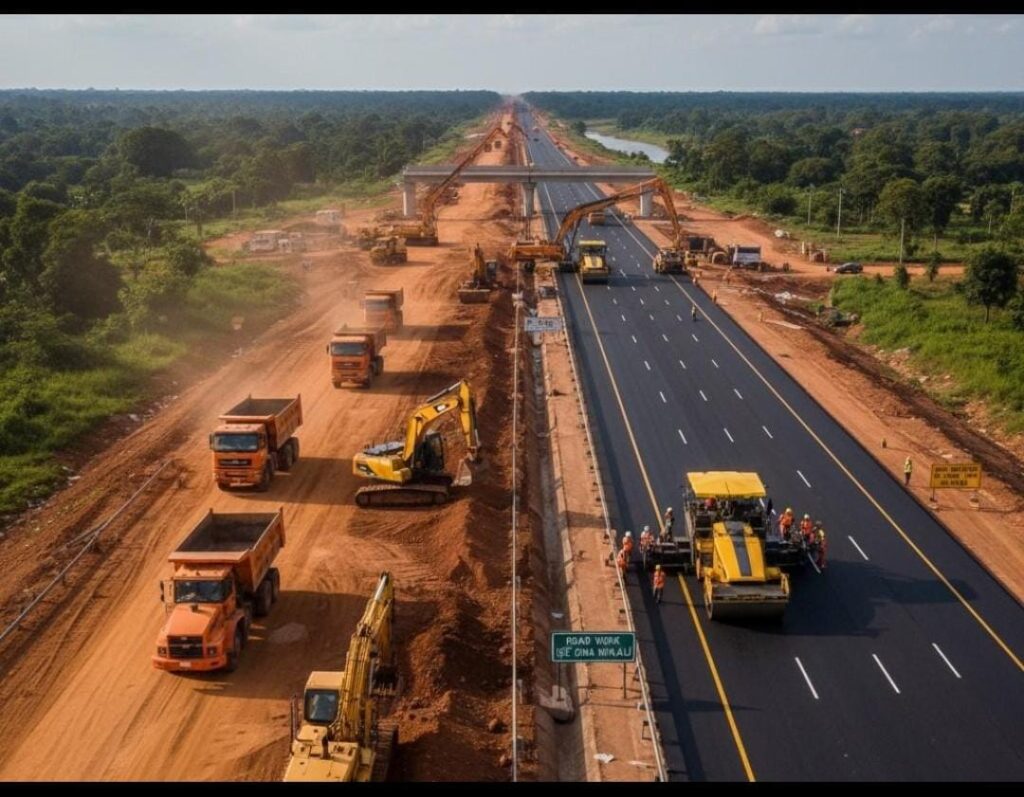
There is no dispute that infrastructure development is an important responsibility of government. Roads, bridges, rail lines, hospitals, schools and power projects are critical to economic growth and national development. Any administration that invests in addressing Nigeria’s infrastructure deficit deserves recognition for doing so. However, the mere visibility of projects should not be mistaken for evidence of meaningful transformation.
Development is ultimately measured not by the number of projects commissioned, but by the extent to which they improve the lives of citizens. The true test of governance lies in outcomes rather than appearances. Nigerians are less concerned about ceremonial ribbon-cutting events than they are about whether infrastructure investments translate into affordable transportation, reliable electricity, quality healthcare, improved education and expanded economic opportunities.
Nigeria’s history offers ample reason for caution. Successive administrations have launched and commissioned projects that generated public excitement but delivered limited long-term benefits. Across the country, there are examples of roads that deteriorated shortly after completion, public facilities that became underutilised, and capital projects that failed to justify the enormous resources invested in them. Such experiences have taught Nigerians that visibility does not automatically equal effectiveness.
The key question, therefore, is not whether projects can be seen, but whether they are producing measurable results. Are businesses benefiting from improved infrastructure? Are transportation costs decreasing? Is electricity becoming more reliable? Are farmers accessing markets more easily? Are young people finding employment opportunities created by these investments? These are the indicators that determine whether infrastructure development is genuinely contributing to national progress.
To be fair, supporters of the Tinubu administration can rightly argue that many infrastructure projects are long-term investments whose benefits may not be immediately visible. Major economic transformations rarely occur overnight. Rail corridors, highways, energy projects and industrial investments often require years before their full impact is felt. It would therefore be unfair to dismiss every ongoing project simply because its benefits have not yet materialised.
However, patience should not be confused with unquestioning acceptance. Citizens have a legitimate right to demand accountability, transparency and measurable outcomes. They deserve to know the costs of projects, the timelines for completion, the sources of funding and the expected returns on public investment. Governments should be evaluated not only on what they build, but also on how efficiently they manage public resources and whether promised benefits are eventually delivered.
The editorial also appears to pay insufficient attention to the broader economic realities confronting ordinary Nigerians. While infrastructure projects continue to receive publicity, many households are struggling with the rising cost of living. Inflation remains a significant challenge, food prices continue to strain family budgets, transportation costs have increased, and many citizens are concerned about declining purchasing power. These realities shape public perceptions of government performance just as much as visible construction projects do.
This does not mean infrastructure investments are unimportant. On the contrary, they remain essential to long-term growth. Yet development should be assessed holistically. A government cannot be judged solely by physical structures, nor can it be judged solely by economic hardships. Both achievements and challenges must be considered together to arrive at a fair assessment.
Furthermore, sustainable development requires more than constructing physical assets. It depends on maintenance, institutional effectiveness, policy consistency and quality service delivery. A modern hospital building is of limited value without medical personnel and equipment. A newly constructed road cannot achieve its purpose if insecurity discourages its use. Likewise, power infrastructure must be supported by efficient transmission and distribution systems to produce meaningful results.
This is why “seeing” should be the beginning of evaluation, not the end of it. Citizens should look beyond impressive photographs, commissioning ceremonies and official announcements to assess whether projects are creating tangible improvements in living standards.
Blueprint’s editorial is right to highlight visible government initiatives. However, visibility alone cannot be the benchmark for success. Nigerians deserve governance that prioritises impact over optics, results over rhetoric and sustainability over symbolism.
In the final analysis, seeing is not always believing. In a democratic society, belief is earned when citizens can experience the benefits of government policies in their daily lives. Nigeria does not merely need projects that can be seen; it needs projects that can be felt through improved welfare, greater economic opportunities and a better quality of life.
Aniefiok Victoria Asuquo
Student, Department of Strategic Communication, Yakubu Gowon University
Email: [email protected]
