



Nigeria Must Stop Excusing Failed Highways and Start Fixing Them
By Abashi Rahab
The editorial published by The PUNCH on August 31, 2026, titled “Interstate Highways of Agony, Hollow Excuses,” captures a reality Nigerians can no longer afford to ignore. I strongly agree with the writer’s position on the deplorable state of Nigeria’s interstate highways and the consequences this continues to have on motorists, businesses and the wider economy. For years, Nigerians have complained about the terrible condition of major highways, yet the situation keeps deteriorating. Roads that should connect communities and drive economic activity have instead become sources of frustration, financial loss and, in many cases, avoidable deaths.
The editorial is right that Nigerians have heard enough excuses. There is always one explanation or another: rainfall, heavy traffic, lack of funds, contractors, bureaucracy or the claim that a particular road was inherited from a previous administration. While some of these may be legitimate challenges, they cannot continually justify roads remaining impassable for months or even years. At some point, responsibility must be accepted. A government cannot inherit a bad road and simply inherit the excuse that it was not responsible for creating it. Nigerians do not travel according to which administration constructed a road; they simply need to reach their destinations safely.
The consequences of failed roads extend far beyond motorists’ inconvenience. A trader who spends two extra days transporting goods is losing money. A farmer whose produce is delayed risks losing perishable commodities. Transport companies dealing with constant vehicle breakdowns spend more on repairs. Manufacturers face delays in receiving raw materials, and consumers ultimately bear the increased cost through higher prices. A bad road is not just an infrastructure problem; it is an economic problem.
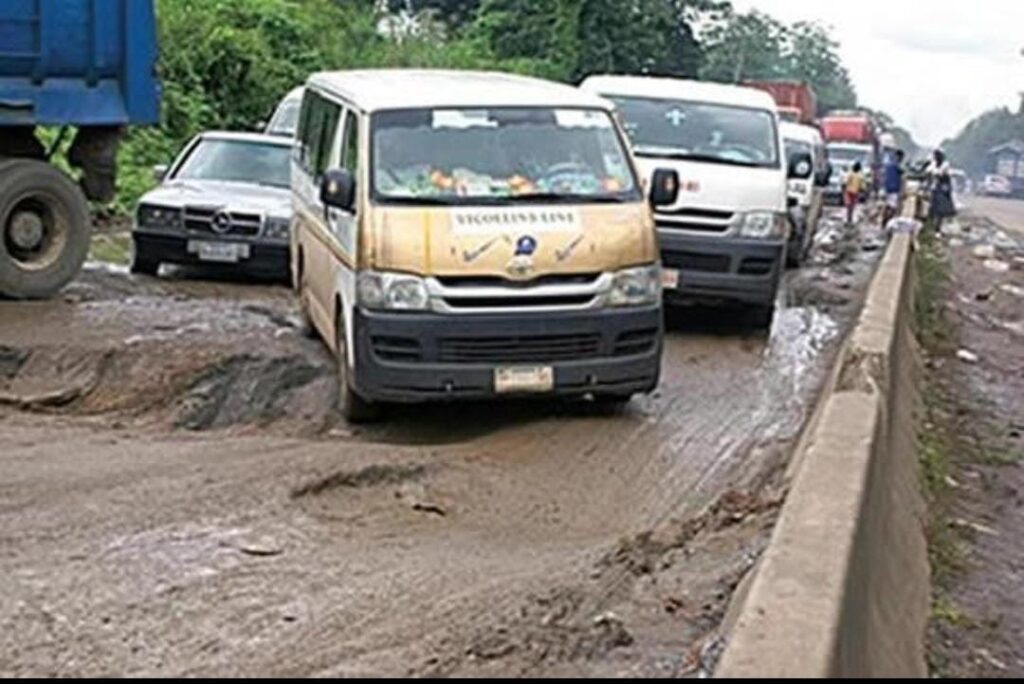
It is also a safety issue. Every deep pothole, collapsed section, abandoned construction site and poorly managed diversion represents a potential danger. Motorists are forced into sudden manoeuvres to avoid damaged portions, especially at night. Heavy-duty trucks struggling through bad sections can overturn, while smaller vehicles remain vulnerable to accidents. Road maintenance is not an issue that concerns only motorists; it affects everyone.
What is even more troubling is the culture of celebrating road projects at the point of award rather than at the point of completion. Announcing billions of naira for a road project is not the same as delivering a road Nigerians can actually use. Government should be judged by the condition of the road after the project, not by the size of the contract awarded. Contractors who fail to meet agreed standards should face consequences, and officials responsible for supervising projects must be held accountable. If a contractor lacks the technical capacity to execute a project, that should be discovered before the contract is awarded, not after millions have been spent and Nigerians have suffered the consequences.
Maintenance is equally important. Nigeria has developed a habit of waiting until roads become almost completely unusable before responding. A small pothole that could have been repaired cheaply eventually becomes a massive failure requiring far more money to fix. Road maintenance should be treated as a continuous responsibility rather than an emergency response. Highways should be regularly inspected, damaged portions repaired promptly and construction projects properly monitored from start to finish.
Nigeria must also rethink its dependence on road transportation. Heavy trucks carrying enormous volumes of goods place constant pressure on highways. A stronger rail system would reduce the burden on major roads, especially for long-distance cargo. But while long-term alternatives are being developed, the roads Nigerians rely on today cannot be abandoned.
Citizens also have a role to play. We complain about bad roads while travelling, but the conversation often ends when we reach our destinations. Civil society organisations, the media and professional bodies must continue to ask questions about road projects, budgets, contractors, timelines and outcomes. The media, in particular, should not stop at exposing a bad road. It should follow the money, track the contractor, examine the project timeline and return months later to ask whether promises were fulfilled. Sustained attention makes it harder for failures to disappear from public conversation.
The Federal Government may not be able to fix every road at once, but it can prioritise highways that carry the greatest volume of people and economic activity. It can also be more transparent about timelines and challenges rather than leaving motorists stranded without reliable information. Most importantly, Nigerians deserve a shift from excuses to measurable results.
A country cannot aspire to become a major economic force while its roads remain a source of misery for the people who drive that economy. Infrastructure is not just about concrete, asphalt and bridges; it is about people’s livelihoods, safety, time and dignity. No Nigerian should spend days trapped on an interstate highway because a road project has been poorly managed. No business should lose millions because a truck carrying its goods is stuck on a pothole-filled road. And no family should lose a loved one to an accident that could have been prevented by proper maintenance.
The writer of the editorial is right to sound the alarm, but the conversation must not end with another editorial or another promise. Nigeria needs roads that work, institutions that take responsibility and a system that rewards performance rather than excuses. Until that happens, our highways will remain more than roads,they will continue to be painful reminders of the distance between government promises and the everyday reality of Nigerians.
Rahab Abashi is a student of the University of Abuja.
Email: [email protected]
