




Elections Must Be Decided by Voters, Not Courtrooms
By Jamiu Abdulgafar Olamilekan
The Punch editorial of September 1, 2026, titled “Jonathan, Obasanjo: wrong for courts to determine elections,” highlights one of the most persistent contradictions in Nigeria’s democratic experience. Citizens are encouraged to exercise their constitutional right to choose their leaders, yet the final outcome of that choice is increasingly determined in the courtroom. The recent concerns raised by former Presidents Goodluck Jonathan and Olusegun Obasanjo about the growing influence of the judiciary in electoral matters deserve serious reflection. They force us to confront a fundamental question: at what point does judicial intervention stop protecting electoral justice and begin undermining the primacy of the voter?
At the 2026 Goodluck Jonathan Foundation Democracy Dialogue in Bauchi, both former presidents expressed worry over how deeply election disputes have become embedded in Nigeria’s political process. Their observations reflect a system in which elections do not end when votes are counted and results declared; instead, another phase of political competition begins in the courts. There is nothing undemocratic about seeking judicial redress. The judiciary is an indispensable pillar of constitutional democracy. Where electoral laws are breached, votes manipulated, candidates unlawfully excluded or citizens’ rights violated, the courts must provide an avenue for justice. Without such safeguards, elections could easily become exercises in impunity.
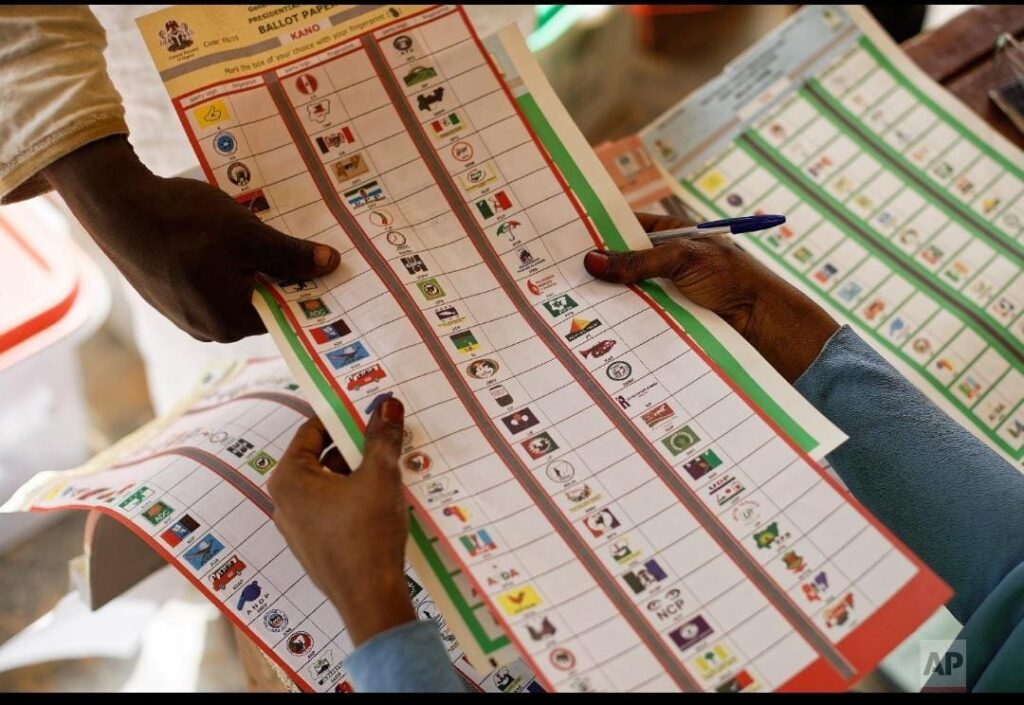
The concern arises when the courtroom begins to resemble a second polling station. Elections are fundamentally mechanisms through which citizens confer political legitimacy on their chosen representatives. When millions of voters participate in an election only for a small number of judges to later determine who occupies the office, the democratic meaning of the ballot becomes blurred. This is not an argument for weakening the judiciary. It is an argument for strengthening the electoral process so thoroughly that judicial intervention becomes the exception rather than an almost expected stage of political competition.
Nigeria’s electoral history shows that this problem is not theoretical. Election results are frequently challenged, sometimes through lengthy proceedings that extend far beyond the period in which citizens expected the contest to have ended. In some cases, judicial decisions have reversed electoral outcomes, producing situations where a candidate declared winner at the polls ultimately loses the office through litigation. Such circumstances inevitably raise difficult questions about public confidence. If voters begin to believe that their ballots merely determine who enters the courtroom rather than who assumes office, the democratic value of participation is weakened.
Responsibility for this situation does not rest solely with the judiciary or the Independent National Electoral Commission. Political parties are central to the problem. Internal party democracy remains weak, and disputes over primaries, candidacy and party structures routinely migrate to the courts. When parties fail to establish transparent and credible mechanisms for resolving internal disagreements, the judiciary becomes an unwilling participant in political contests that should have been settled within the political arena.
INEC must also confront the institutional weaknesses that make electoral disputes possible. Improvements in technology and procedures are important, but technology alone cannot guarantee credibility. The integrity of elections depends on transparent processes, competent administration, accountable officials and the willingness of political actors to respect the rules. Nigeria’s political culture also plays a role. Too many politicians approach elections as existential battles in which defeat is unacceptable. Consequently, every available avenue is explored to overturn unfavourable outcomes. Litigation becomes an extension of electoral warfare rather than a narrow mechanism for correcting genuine violations.
Still, in insisting that elections should be decided by voters, Nigerians must recognise that the ballot box cannot become a sanctuary for illegality. A candidate should not retain office merely because votes were counted in his favour if those votes were obtained through substantial violations of electoral law. The sanctity of the ballot must be accompanied by the sanctity of the rules. Where an election is found to have been fundamentally compromised, conducting a fresh election may, in appropriate circumstances, provide a more democratic solution than simply transferring victory from one candidate to another through judicial pronouncement. Such an approach returns decisive power to the electorate while preserving the judiciary’s role as an arbiter of legality.
Nigeria needs a comprehensive rethink of its electoral dispute resolution system. Election petitions must be resolved expeditiously without sacrificing thoroughness. Political parties must strengthen their internal democratic institutions. INEC must continue improving credibility, and the judiciary must remain independent enough to punish genuine violations without becoming perceived as another arena for political contest. Above all, political actors must learn that losing an election is not the same as losing dignity or relevance.
As Nigeria moves toward another general election cycle, the observations of Jonathan and Obasanjo should prompt sober reflection. Democracy cannot be reduced to the ritual of voting every four years. Citizens must believe their votes matter. Too many Nigerians already express doubt about voting because they fear their votes will not count or will be overturned in court. The courtroom should remain a guardian of electoral democracy, not its substitute. The ultimate political authority in a democracy belongs to the people. Their votes may not always produce outcomes every politician desires, but where those votes are freely, fairly and credibly cast, they must remain the foundation of political legitimacy.
Nigeria must strive for an electoral system in which the final whistle is blown at the ballot box, not in the courtroom.
Jamiu Abdulgafar Olamilekan is a student of Strategic Communication at Yakubu Gowon University, Abuja.
Email: [email protected]
