




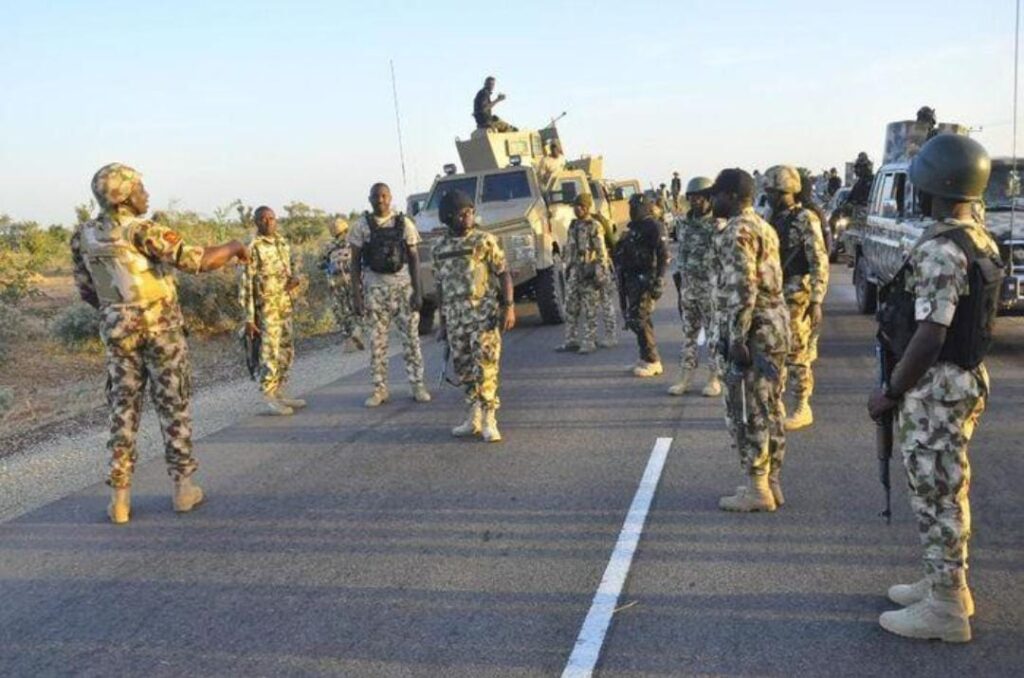
Beyond Logistics—Nigeria Must Fight the Roots of Terrorism
By Agabi Charis
I read with keen interest the editorial published by Vanguard on September 1, 2026, titled “Uprooting Terrorists’ Logistics Supply Chains.” Its central argument, that choking terrorists’ and bandits’ logistics, funding and supply networks is essential to dismantling their operational capacity, I both accurate and urgent. Cutting off access to weapons, fuel, funds, food, mobility and human collaborators strikes at the very heartbeat of violent groups. The recent interception of terrorist supplies in Zamfara is therefore commendable, and the call for coordinated intelligence, financial tracking, border security and whole‑of‑government backing under President Bola Ahmed Tinubu is timely.
However, while these tactical measures are necessary, they are not sufficient to deliver lasting peace. Nigeria’s response to terrorism and banditry must go beyond disrupting the machinery of violence to addressing the conditions that allow such networks to survive, adapt and regenerate. The editorial rightly notes that our security architecture has struggled to translate the sacrifices of security personnel into decisive victory. One major reason is that terrorism and banditry in Nigeria are not merely security challenges; they are symptoms of deeper social, economic and governance failures. In communities that are impoverished, alienated or abandoned, violent groups find opportunities for recruitment, sympathy and forced collaboration.
This reality does not excuse terrorism or banditry. Rather, it underscores why military pressure alone cannot permanently eliminate an insurgency or criminal ecosystem that continues to find new recruits and support systems. Nigeria may intercept shipments, seize weapons and freeze financial channels, but if underlying vulnerabilities remain, new supply chains will emerge, new recruits will be enlisted and new networks will replace those dismantled.
Dismantling terrorist logistics must therefore go hand in hand with winning the trust and cooperation of local populations. Communities in affected regions have endured years of insecurity and displacement and, in many cases, feel unprotected or neglected by the state. Their cooperation is indispensable because local residents often possess information that cannot be obtained through conventional intelligence methods. The Armed Forces and other security agencies deserve commendation for their courage and sacrifices, but they cannot win this war alone. Intelligence is not produced only in command centres; it is also generated within communities. When citizens trust security institutions and believe their information will be handled responsibly, they are more likely to report suspicious movements, identify collaborators and provide early warnings.
This makes community engagement a critical component of national security. Government must invest deliberately in rebuilding confidence between citizens and security agencies. Community leaders, traditional institutions, religious organisations, civil society groups and local governments should be incorporated into sustained security and peace‑building efforts. A community that feels protected and included is less vulnerable to manipulation by violent groups.
Economic opportunity is equally important. Young people without meaningful employment, education or prospects can become vulnerable to recruitment by criminal and extremist networks. Poverty does not automatically produce terrorism, but persistent deprivation creates conditions that violent actors exploit. Programmes aimed at youth empowerment, vocational training, education, agriculture and legitimate employment should therefore complement military and intelligence operations.
Nigeria also needs stronger coordination among government institutions. Terrorist and bandit networks do not operate within the boundaries of a single ministry, state or country. Their activities involve financing, weapons trafficking, illegal mining, smuggling, recruitment and cross‑border movement. Nigeria must strengthen collaboration among security agencies, financial intelligence units, customs authorities, border communities and neighbouring countries. Financial intelligence deserves particular attention. Terrorist organisations cannot sustain prolonged operations without money. Tracking suspicious transactions, identifying illicit financial networks and prosecuting financiers can significantly weaken their operational capacity.
Most importantly, Nigeria needs a long‑term strategy rather than a cycle of reaction after every attack. Security operations may dismantle one network today, but lasting peace requires policies capable of preventing another from emerging tomorrow. This means combining counterterrorism operations with good governance, justice, development, education and social inclusion.
Uprooting terrorist logistics and supply chains is necessary, but it is only one part of the solution. Nigeria must cut off the weapons, money, mobility and support that sustain violent groups while simultaneously addressing the vulnerabilities they exploit. We must fight terrorists on the battlefield, but we must also fight the conditions that allow terrorism and banditry to reproduce themselves. When decisive security operations are combined with accountable governance, economic opportunity, community partnership and effective intelligence, Nigeria will not merely weaken violent networks; it will make it increasingly difficult for them to survive.
The objective should be more than disrupting terrorists’ supply chains. It should be to create a Nigeria in which those supply chains can no longer find the environment, resources or human networks necessary to thrive. That is the path toward isolating violent groups, restoring public confidence and securing a more peaceful nation.
Agabi Chubiyojo Charis is a student of Information and Media Studies at Yakubu Gowon University. He can be reached at [email protected].
