



The Other Side of Development in Kwara
By Ibrahim Olaide Mariam
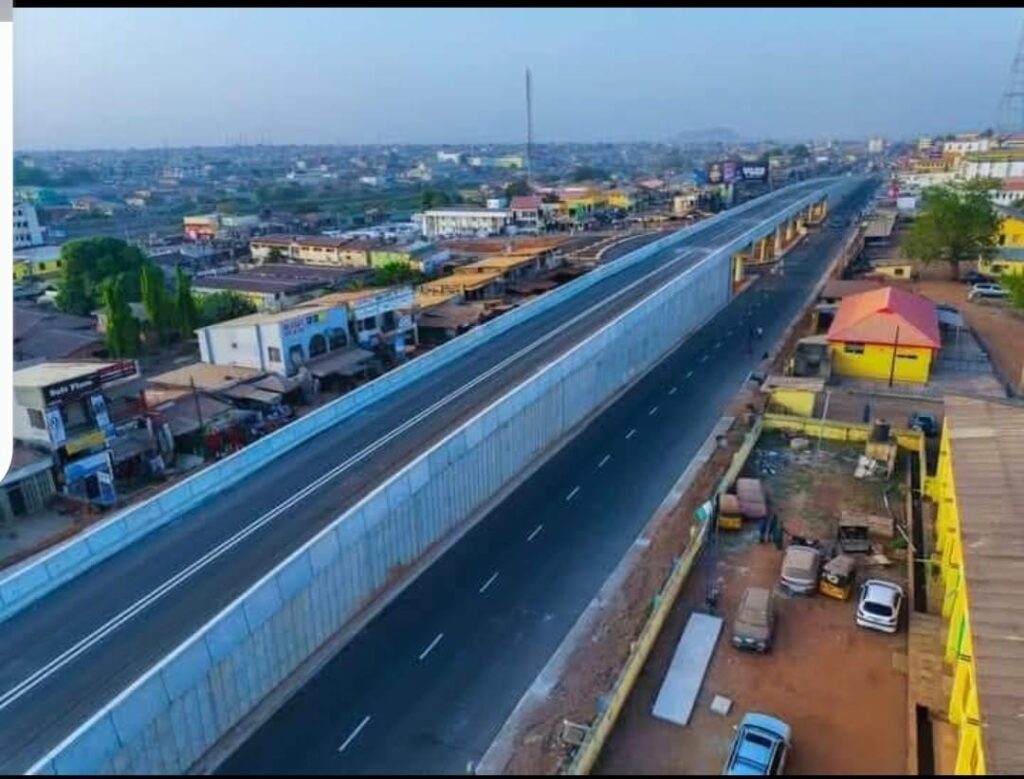
In recent years, Kwara State has emerged as one of Nigeria’s most ambitious subnational governments in the area of urban renewal. Across Ilorin, the state capital, new roads, flyovers, drainage systems, and environmental improvements have transformed the city’s landscape and projected an image of a state preparing itself for economic growth and investment.
The administration of Governor AbdulRahman AbdulRazaq deserves credit for this visible transformation. Visitors and residents alike have acknowledged the improvements in major corridors such as Post Office, Challenge, Sulu-Gambari, and Ibrahim Taiwo Road, while government officials maintain that the urban renewal programme is restoring order, improving mobility, and modernising the state capital.
Yet development is most meaningful when it reaches beyond city centres and touches the lives of people in rural communities where a significant proportion of the state’s population lives and works. As Kwara celebrates the gains of urban renewal, a critical question remains: can the state achieve sustainable prosperity without a corresponding renaissance in its rural areas?
This question is particularly important because agriculture remains one of the strongest pillars of Kwara’s economy. Across Kwara North, Kwara South, and parts of Kwara Central, thousands of farmers depend on rural roads to move produce from farms to markets. Where those roads are poor or inaccessible, transportation costs increase, post-harvest losses rise, and food prices eventually climb in urban markets.
Interestingly, this concern is not limited to observers and commentators. In June 2026, the Alangwa of Agbeyangi, Alhaji Aliyu Baba Oladaride, publicly appealed to Governor AbdulRazaq to extend the benefits of urban renewal to rural communities. Speaking during activities marking his 35th anniversary on the throne, the monarch specifically requested the reconstruction of the Panada-Agbeyangi-Yarun Road, describing rural development as essential to balanced growth. He noted that while Agbeyangi had witnessed progress over the years, infrastructure gaps remained significant obstacles to economic development.
His appeal reflects a broader development challenge facing many Nigerian states: how to balance investments in visible urban infrastructure with the less glamorous but equally important task of connecting rural communities to opportunities.
To be fair, the Kwara State Government has not ignored rural development entirely. State officials have previously highlighted ongoing investments in rural road construction and infrastructure. In 2024, the Commissioner for Works and Transport stated that more than 221 kilometres of rural roads were either completed or under construction across the state, while assuring residents that development would gradually reach every community.
This acknowledgement is important because public discourse should not create the impression that development exists only in urban centres. Rather, the issue is one of scale, visibility, and prioritisation. Urban projects naturally attract greater public attention because they are concentrated in densely populated areas. Rural projects, though equally important, often receive less visibility and therefore less public recognition.
Beyond roads and physical infrastructure, Kwara has also pursued institutional reforms aimed at improving the business environment. In December 2025, the state unveiled its 2026 Action Plan on Ease of Doing Business, focusing on land administration reforms, agricultural investments, regulatory efficiency, and measures to attract investment.
Similarly, the launch of the Kwara Geographic Information System (KW-GIS) Digital Land Information System marked a significant step in modernising land administration. Governor AbdulRazaq described the initiative as a commitment to transparency, innovation, and efficiency, arguing that digitised land records would improve investor confidence and reduce bureaucratic bottlenecks.
These reforms are commendable. However, their success will depend largely on whether ordinary citizens can access and benefit from them. A land digitisation platform may excite investors and policy experts, but its impact will be limited if farmers, artisans, traders, and small business owners in communities such as Kaiama, Omu-Aran, Patigi, and Baruten remain unaware of how these reforms can improve their economic prospects.
The next phase of Kwara’s development journey should therefore focus on bridging the gap between policy innovation and grassroots participation. Development is not merely about constructing roads or digitising records; it is about ensuring that citizens can translate those initiatives into improved livelihoods.
One practical step would be the establishment of a comprehensive Rural Renaissance Programme that integrates road construction, rural electrification, agricultural value chains, digital literacy, and enterprise support. Evidence from development studies across Africa consistently shows that improved rural infrastructure stimulates economic productivity, expands market access, and reduces poverty.
Another priority should be strategic communication. Government ministries and agencies must intensify town hall meetings, community engagements, and local-language awareness campaigns to ensure that reforms are understood beyond policy circles. Citizens are more likely to support government programmes when they understand their benefits and can see how those policies affect their daily lives.
Kwara stands at a pivotal moment. The roads, flyovers, and urban regeneration projects already underway have laid a visible foundation for progress. The challenge now is to ensure that the benefits of development extend beyond Ilorin and reach the communities that sustain the state’s agricultural and economic base.
The true legacy of any development agenda is not measured solely by the beauty of a capital city but by the opportunities available to citizens in every corner of the state. By complementing urban renewal with a deliberate rural renaissance, Kwara can build a model of inclusive development that is not only visible in concrete and asphalt but also reflected in improved livelihoods, stronger communities, and shared prosperity.
Ibrahim Olaide Mariam writes from the Department of Strategic Communication, University of Abuja.
