

UNGA: What Africa Must Do After the UN Applause
By Ibrahim Happiness
I have followed the 81st United Nations General Assembly since the General Debate opened on 22 September, and by the third day one thing was clear: the speeches that matter are not always the loudest ones. The debate runs until 28 September under the theme “Restoring Trust, Managing Transformation: A United Nations That Delivers for All”.
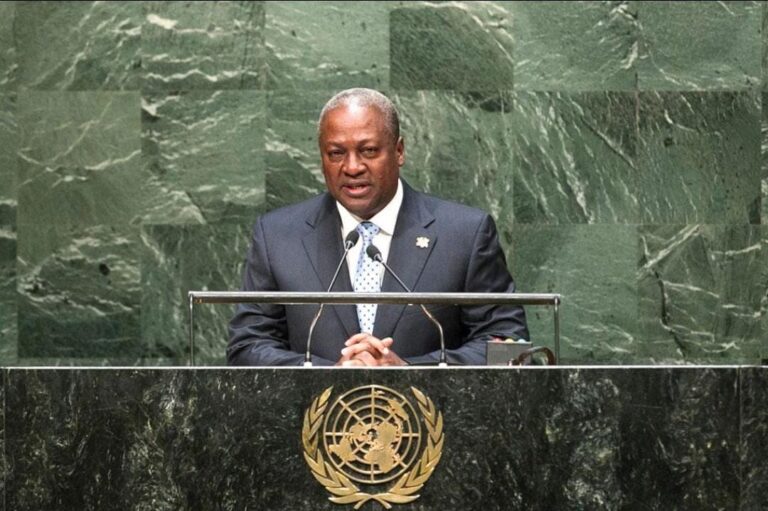
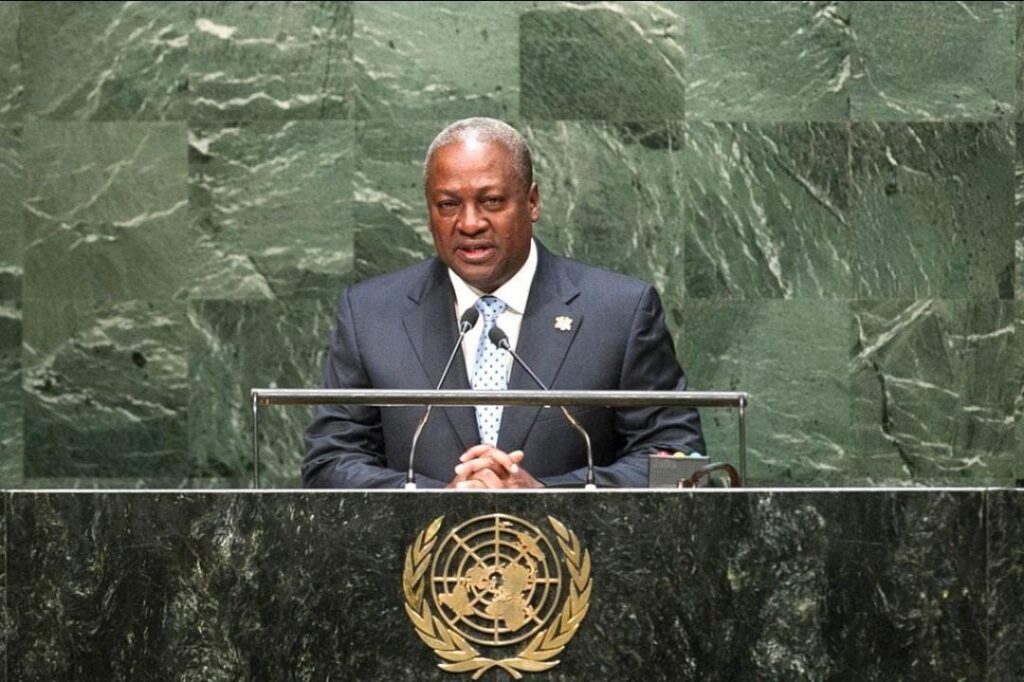
It opened with António Guterres, in his last address as Secretary-General, naming four tests facing humanity: war or peace, inequality, climate change and artificial intelligence. Two days later, John Dramani Mahama of Ghana took the podium and spoke to three of the four.
He did not start with policy. He started with himself. He told the Assembly he was born in Damongo in northern Ghana, named both his parents, and then listed the languages he speaks: Gonja, Akan, Ga, Hausa, some Ewe, and English. For those of us in Abuja, hearing a sitting president tell the world he speaks Hausa, the language of the savannah and the Sahel, landed differently.
It made his point before he made it. Language creates kinship, and belonging is what gives people dignity. Then he turned it into an argument. When belonging is weaponised, he said, it becomes xenophobia, persecution and war, and the United Nations was founded on the opposite principle: every human being belongs to the human family.
The speech was strongest when it refused to stay polite. He reminded the Assembly that on 25 March Ghana tabled Resolution A/RES/80/250, and that 123 nations voted to recognise the transatlantic slave trade and chattel enslavement as the gravest crime against humanity. Some warned that he was reopening old wounds.
His answer was that healing needs truth, truth needs acknowledgement, and acknowledgement must lead to repair. Then he said what repair actually means: an end to unfair trade rules, predatory extraction of resources, discriminatory credit ratings, crushing debt, and the habit of shipping raw materials out of Africa while the jobs and the profit are created somewhere else.
That is the part I keep returning to, because it describes what many Africans live with. Developing countries, he said, borrow at interest rates up to eight times higher than rich ones. African and Caribbean nations hit by floods and droughts they did not cause are forced to borrow to rebuild. Governments end up choosing between servicing debt and serving their people.
Every Nigerian who has watched a budget swallowed by debt service knows this is not abstract.
On representation, the numbers speak for themselves. Africa has 1.5 billion people, over 18 per cent of humanity, and the largest voting bloc in the General Assembly. It has no permanent seat on the Security Council. Mahama demanded one, with full veto rights. That matches the African Union’s position since the Ezulwini Consensus of 2005, and 21 years later nothing has moved. Decisions on Sudan, the Sahel and the Horn are made in a room where Africa sits only by invitation.
Then came the moment that made the speech personal for many people. On Gaza, he did not hide behind diplomatic language. He named five-year-old Hind Rajab and spoke of the more than 20,000 children killed. He reaffirmed Ghana’s recognition of Palestine and called for a two-state solution.
In the same passage, he condemned Hamas’s terrorism and insisted our moral standards cannot be selective. He also called for the embargo on Cuba to end, for more attention to Sudan, and for solidarity with Sahel states fighting terrorism. Two days before, another world leader had told the same Assembly that he faced a choice between a deal with Iran and annihilating it.
Without naming anyone, Mahama said no civilisation deserves to be annihilated, and that dialogue can resolve even the hardest problems. That line was a direct answer to the mood in the hall.
On climate, he gave the Assembly a number and a date. Africa produces less than 4 per cent of global emissions. On 29 June, more than 160 millimetres of rain fell on seven coastal regions of Ghana in 24 hours. Thirty-nine people died.
Anyone who has watched Lagos or Lokoja flood will understand what those figures mean on the ground. His demand was simple: climate finance should come as predictable grants, not loans that push fragile economies deeper into debt.
But the line that stayed with me was not aimed at the West. It was aimed at us. Mahama told African leaders that anyone demanding equity must come with clean hands, and that we must fight corruption and make sure every dollar of our people’s money counts.
In a period when Nigerians are still absorbing reports of fake federal agencies and ghost workers draining the treasury, that sentence has to be read at home too. We cannot ask the world for a fairer order while tolerating leakages that cost us more than any unfair credit rating.
I also have questions. Guterres named artificial intelligence as one of the defining tests of this era, yet Mahama’s address said almost nothing about it. If Africa wants to help write the rules of AI instead of just consuming what others build, its leaders need positions on AI as clear as the ones they now have on debt and the Security Council.
Resolution 80/250 also carries moral weight but is not binding, and Mahama’s own list of progress was that the Netherlands, Germany and France have made positive moves to join the conversation. A conversation is not a commitment. He also announced that Ghana takes the chairmanship of the African Union in January 2027, the year Ghana marks 70 years of independence. That is where his promise of one confident African voice will be tested.
He closed by quoting Kwame Nkrumah’s 1957 declaration that Ghana’s independence means nothing unless it is linked to the total liberation of Africa, and then extended it to say that no nation’s freedom is secure unless it is tied to the freedom of all humanity. It was a good ending. Good endings are easy.
Africa spoke at the UN this week, and it spoke well. What matters now is what happens after the delegates fly home: one African position on Security Council reform, minerals processed at home instead of exported raw, the African Continental Free Trade Area made to work in practice, and our own governments made to account for every naira. Applause is cheap. Follow-through is what the speech will be judged on.
Ibrahim Happiness is a final-year student of Strategic Communication at the University of Abuja
