




Sensational Media and the Battle for Nigeria’s Youth
By Joel Maina
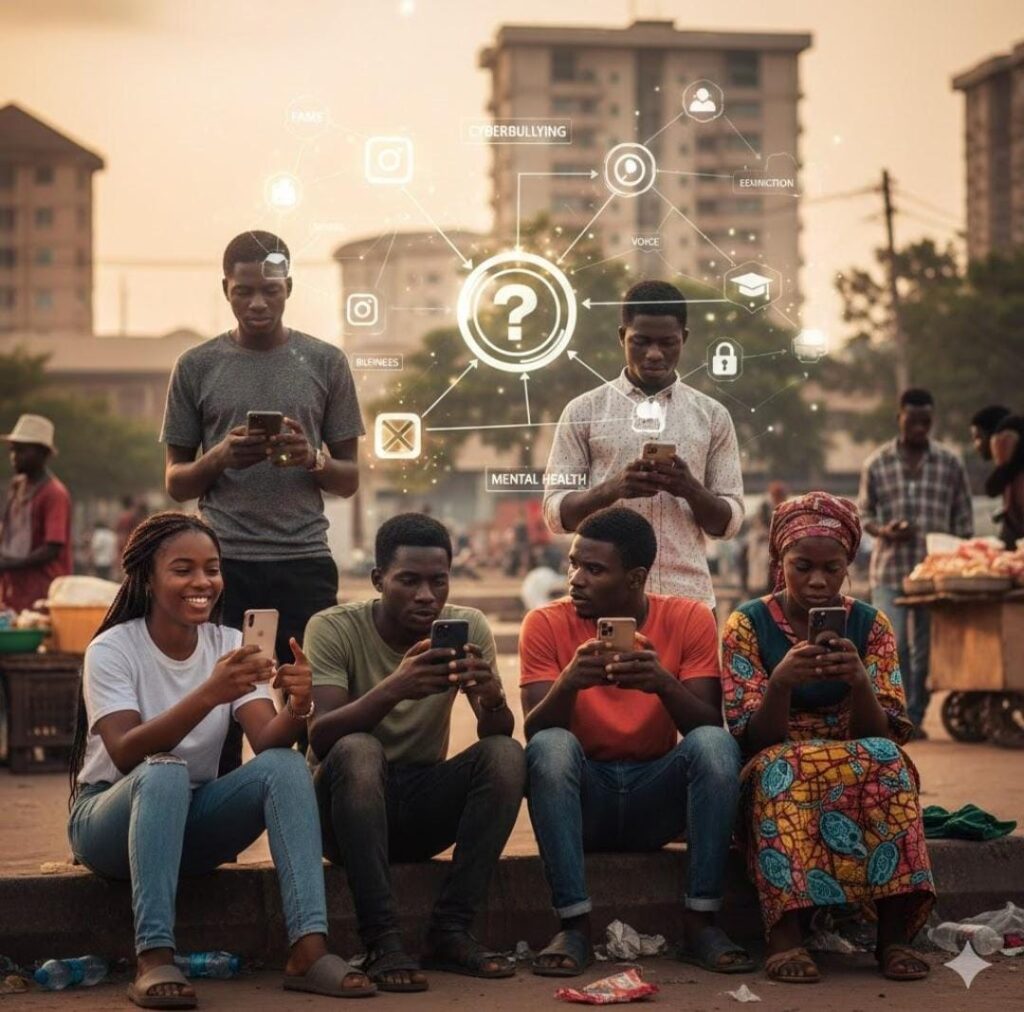
Sometimes, I wonder what the average Nigerian youth would remember after spending an entire day scrolling through social media. Perhaps it would be a celebrity controversy, a frightening video, a political argument, a sensational headline or an unverified story that everyone seemed to be discussing. What is striking is how quickly one story replaces another. We consume, react, share and move on, often without stopping to ask whether what we have just seen is true, useful or even worth our attention.
I have noticed that some of the stories that attract the most attention online are not necessarily the ones that teach us the most. The loudest headline often wins. The most controversial opinion gets the most engagement. A shocking claim can travel across WhatsApp groups, TikTok, Facebook, X and other platforms within minutes, while a carefully researched story may struggle to receive a fraction of the same attention.
This is the paradox of growing up in Nigeria’s digital age. Social media has given young people opportunities previous generations could hardly imagine. With a smartphone and an internet connection, a young Nigerian can access lectures from leading universities, follow global developments, learn a skill, promote a business, discover opportunities and communicate with people across the world.
But the same phone can also become a doorway to misinformation, sensationalism and endless digital noise.
The problem, therefore, is not that young Nigerians spend time online. The more important question is what the digital environment is teaching them to value.
Sensational content often travels faster than careful journalism because it is designed to trigger an immediate emotional response. A dramatic headline can attract thousands of clicks before anyone checks its accuracy. A misleading video can become viral before its original context is established. An allegation against a politician, celebrity or public figure can quickly become accepted as fact simply because thousands of people have repeated it.
In today’s attention economy, outrage is profitable. For some media organisations and digital creators, the pressure to generate clicks, followers, comments and shares can create an unhealthy incentive to prioritise speed and controversy over context. This does not mean every popular story is false or that every striking headline is irresponsible. But it does mean that the digital environment can reward content that provokes people rather than content that informs them.
Young Nigerians are particularly important to this conversation because they are not merely consumers of digital content. They are also its distributors.
A young person who forwards an unverified message to a WhatsApp group or shares a misleading video can potentially expose hundreds of people to it within minutes. In that sense, everyone with a digital platform has become a participant in the information ecosystem.
The consequences can be serious. Misinformation about elections can influence political perceptions. False health claims can affect personal decisions. Fabricated stories about ethnic or religious groups can deepen suspicion and tension. Unverified allegations can destroy reputations before the truth has an opportunity to catch up.
There is also a less visible consequence: the effect on how young people perceive their country and their own future.
When a social media feed is dominated by stories of violence, corruption, poverty, political failure and scandal, it becomes easy to develop the impression that Nigeria is incapable of progress. Constant exposure to negative stories can create frustration and cynicism, particularly among young people already struggling with unemployment, economic hardship and uncertainty about the future.
Being informed about Nigeria’s problems is necessary. Becoming emotionally consumed by them is another matter.
A healthy media environment should expose society’s problems while also helping citizens understand them. Journalism should investigate wrongdoing and hold powerful people accountable, but it should also provide context, evidence and, where possible, pathways toward solutions.
The answer to sensationalism is therefore not censorship. It is better journalism and a more discerning audience.
That responsibility begins with each individual. Before sharing a dramatic claim, young Nigerians should pause and ask: Who published this? What evidence supports it? Is the source credible? Have other reliable organisations reported it? Is the headline accurately reflecting the story? Could the photograph or video have been taken from another event?
These questions take only a few seconds, but they can stop misinformation from travelling further. Schools and universities also have a responsibility to prepare young people for this reality. Digital and media literacy should become an essential part of education. Students need to understand how algorithms influence what they see, how misinformation spreads, how photographs and videos can be manipulated and how credible information can be verified.
But young Nigerians should not only be taught how to avoid harmful content. They should also be encouraged to create better content.
The same TikTok, YouTube, Instagram or X account used to spread gossip can be used to explain history, discuss public policy, promote entrepreneurship, document Nigerian culture, simplify complex issues and amplify credible information. Digital influence does not have to be built around controversy.
Indeed, Nigerian youth have the numbers, creativity and digital reach to change what becomes popular online.
Media organisations equally have a responsibility. The pursuit of traffic should never completely replace editorial judgment. A sensational headline may generate clicks today, but journalism ultimately depends on credibility. Once audiences discover that a platform routinely exaggerates, distorts or publishes unverified information, trust becomes difficult to rebuild.
The future of Nigeria’s information space will therefore depend on choices made by all of us, journalists, media organisations, technology platforms, educators, creators and, importantly, young audiences.
Young Nigerians do not need to abandon social media. They need to become more intelligent users of it.
They can reward credible journalism with their attention, challenge misinformation without abuse, verify information before sharing it and use their platforms to educate rather than simply provoke.
Sensationalism may win the race for attention, but substance is what builds an informed society. Perhaps the real challenge before Nigerian youth is not how to escape the digital world, but how to ensure that the digital world does not shape their thinking without their permission.
The next viral story does not have to be the loudest one. It can be the one that leaves us wiser than we were before we clicked.
Joel Maina is a student of Strategic Communication and Media at the University of Abuja. He can be reached at [email protected].
